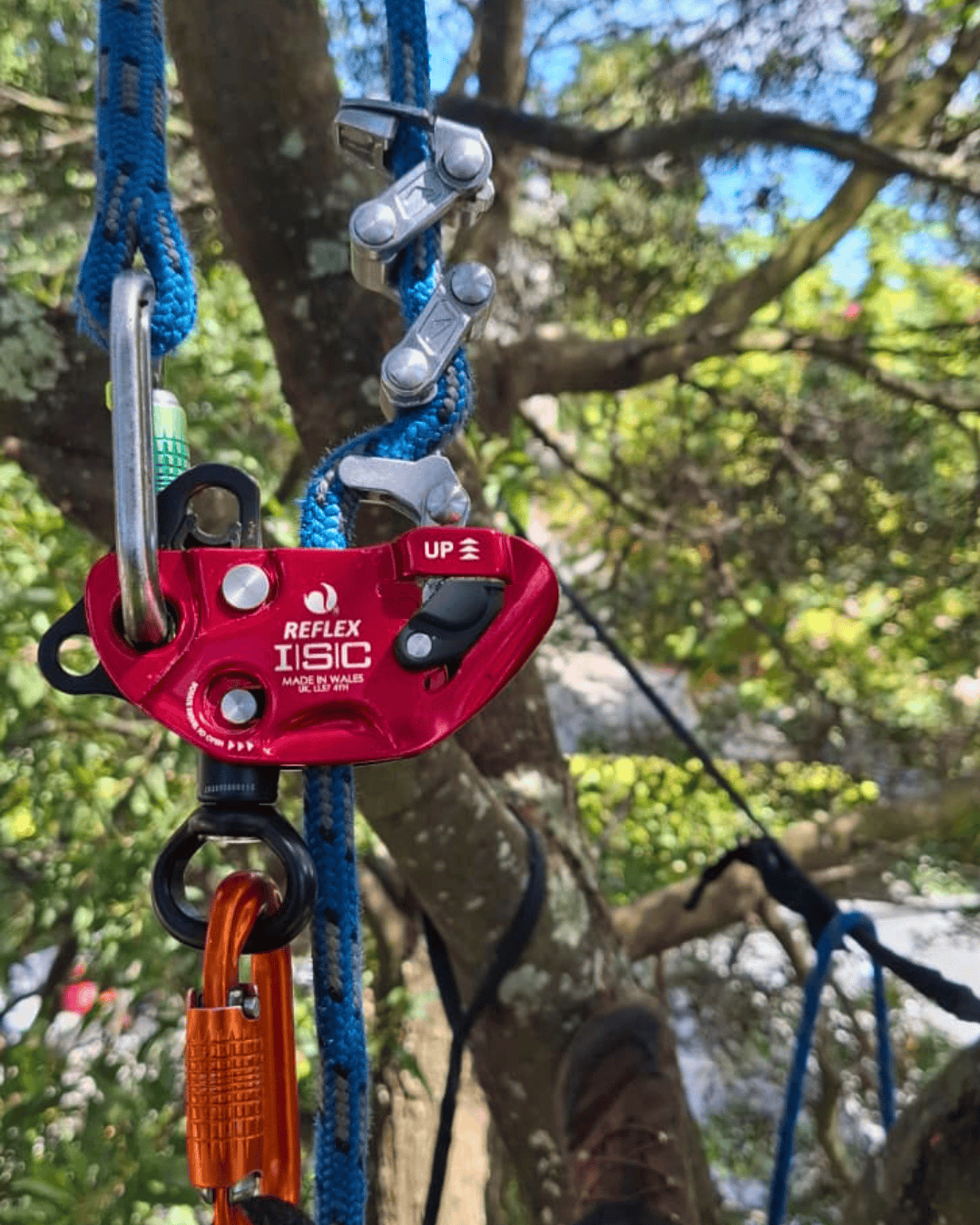
At CSP Distribution, we’ve recently received an update from ISC Wales regarding their newly released REFLEX device. We wanted to pass this information on to our customers and the wider climbing community to ensure everyone is getting the best possible performance from their equipment.
ISC has been working closely with a small number of users who have reported experiencing slippage during use. Their engineering team is actively investigating these cases to better understand the contributing factors.
As with all mechanical hitch devices, performance can be influenced by a range of variables. ISC has highlighted several key factors that may contribute to wear or slippage, including:
- Device cleanliness and maintenance
- Overall device condition
- Rope cleanliness and maintenance
- Rope compatibility
- Rope wear (e.g. flattening, sheath slippage)
- Environmental conditions
- User weight
- Climbing style (such as long or fast descents)
Understanding the full context of how the device is being used is essential when diagnosing any performance-related concerns.
Key Points from ISC
Device & Rope Cleanliness
Regular inspection and maintenance are critical. Build-up of sap, dirt, sand, or debris on either the device or rope can significantly impact performance and reduce product lifespan. ISC recommends routine cleaning, lubrication, and inspection of moving parts, along with proper rope care in line with the manufacturer’s guidelines.
Rope Compatibility
While the REFLEX is designed for use with EN 1891-A ropes, not all ropes within this standard perform the same. Variations in rope construction mean compatibility can differ, especially as both rope and device wear over time. ISC strongly recommends performing function and performance checks before every use.
Additional Friction
In certain situations (such as higher user weights, rescue scenarios, or long descents), adding extra friction to the system can improve performance. ISC notes that using additional tools such as an APEX/Rope Wrench and Tether can help manage wear and reduce the likelihood of slippage, particularly at higher descent speeds.
What to Do if You Experience Issues
If you notice any decline in performance or slippage, you should first review the factors outlined above and ensure your system is properly maintained and configured. As always, pre-use checks and ongoing monitoring during use are essential.
If issues persist, the device should be removed from service immediately and submitted for inspection through ISC’s product support process. Their engineering team is continuing to investigate reported cases and is committed to working directly with users to identify solutions.
If you have any questions about the REFLEX or need assistance, feel free to reach out to the CSP Distribution team. We’re always here to help.